
Reflections on my trip to Kazakhstan
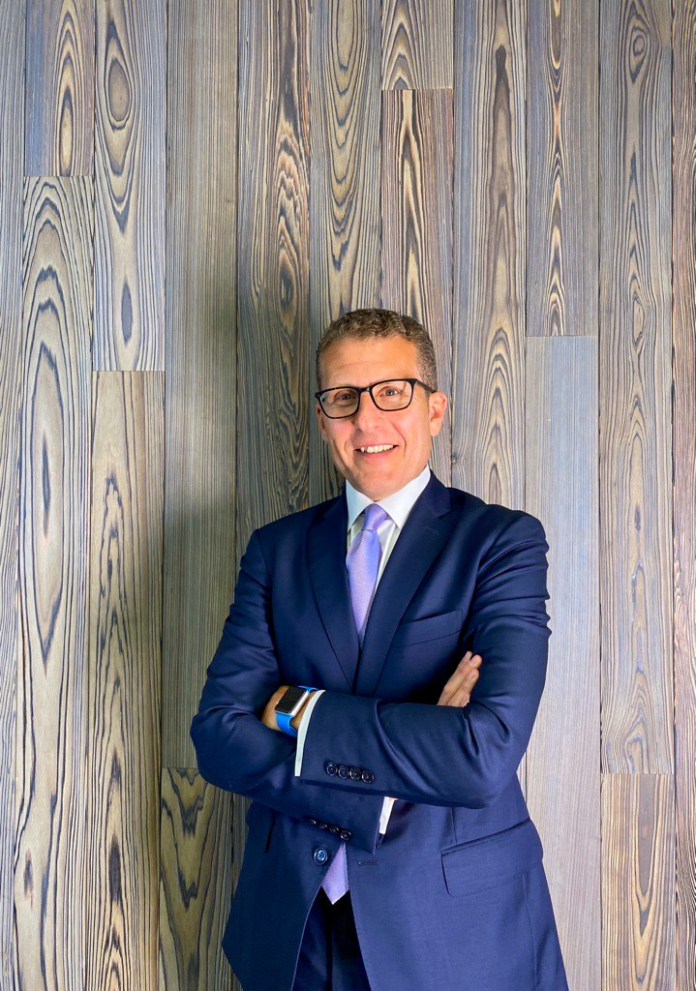

I was recently invited to Kazakhstan to speak about international investor access. While I had never been, the opportunities and challenges facing a frontier market looking to grow were not unique or unknown to me. However, I came home even more convinced of the potential that exists in markets that remain outside the daily view of most investors, and how much work is still needed to close that gap. Between my presentation at the Kazakhstan Stock Exchange and the panel discussion at the AIFC Astana Finance Days event, one question kept coming back to me. How do you turn investor interest in a country into a vibrant secondary market where investment stays, liquidity flourishes and businesses grow?
Over my career, I have worked with companies, exchanges and financial institutions trying to connect local opportunity with international capital. The ambition is usually clear. The difficulty lies in making all the steps between an investor discovering a company and owning its shares work together.
My visit offered a chance to discuss those steps with people directly involved in developing Kazakhstan’s markets. I was grateful to Adil Mukhamejanov and the KASE team for the invitation to share my perspective and for their hospitality. At Astana Finance Days, the AIFC discussions with Olivier Gueris and others placed those practical questions within a broader conversation about the region’s role in global finance. Meetings with leaders from other exchanges also reinforced how widely these challenges are shared.
What stayed with me was the opportunity to move from broad ambitions into specific questions. Which investors are we trying to reach and why? What information can they access? Can their brokers accept an order? Who holds the shares, handles settlement and manages the currency conversion? These details can sound dull on a conference stage, but they determine whether a market is accessible in practice. I also realized that the glamour of the IPO is often the singular focus, while the less “sexy” work of building a vibrant secondary market is often overlooked.
An investor might be interested in a Kazakh company and still never become a shareholder. Perhaps the financial information is difficult to find or the available research does not reach the systems that investors use. Perhaps the security appears on a screen but cannot be traded through their broker of choice. Each additional hurdle creates another reason to move on to something more familiar with less execution friction.
This is why I believe market development needs to start with the investor’s experience at its core. Exchanges naturally focus on the infrastructure and rules within their own markets. International investors experience a much longer chain, running through information providers, brokers, custodians, currency markets and settlement systems. A weakness anywhere along that chain can undermine the good work done elsewhere.
It also means being precise about what we mean by foreign investors. The largest global institutions have resources to assess unfamiliar markets and establish the arrangements needed to invest. Smaller institutions, family offices and self-directed investors may approach the same opportunity with very different tools. Reaching them requires understanding their limits and building access that fits how they already operate. There is also a significant difference in international investors participating in an IPO vs. the broader and deeper pool of investors wanting to participate well after the initial capital event. Not all investors create liquidity.
Disclosure and research are also a central part of that effort. Publishing a report on a company website is useful, but the information also needs to reach investors where they make decisions. It should be searchable, understandable and available through familiar channels. Research can provide the context that financial statements alone cannot, helping someone unfamiliar with a business understand its strategy, risks and competitive position.
The trading side deserves the same attention. A quotation or overseas trading facility can create an entry point, but its value depends on what supports it. Brokers need a workable route to execute and settle transactions. Market makers need confidence that they can source liquidity and manage their exposure. Investors need clarity around costs, custody and what happens when they want to sell or if there are dividends and/or corporate actions.
None of this removes investment risk, nor should it. Investors still need to judge the company, its governance and the market in which it operates. The objective is to remove avoidable uncertainty around the process of investing, so that the decision can focus on the merits of the opportunity. Public markets are still the best source of price discovery, but only if information is available, consumable and comparable.
The trip also reinforced my view that secondary markets deserve more attention in discussions about economic development. An IPO is an important milestone, but a company’s relationship with public investors continues long after its first day of trading. Reliable information, credible pricing and the ability to enter and exit positions all shape that relationship. They also influence whether investors will support the company when it next needs capital.
Kazakhstan gave me a useful setting in which to explore these ideas, while the conversations extended well beyond one country. Markets across Central Asia and the wider region have distinct structures, priorities and constraints. Any strategy needs to respect those differences. Applying the same overseas listing or investor relations solution everywhere risks missing the actual obstacle.
I left Kazakhstan grateful for the opportunity and encouraged by the conversations. There is considerable work between expressing an ambition to attract international capital and creating the conditions for it to participate consistently. Helping markets make that transition is the reason I built Crossbridge, and this trip convinced that the opportunity is real and the work is worthwhile.


Comments